01 / THE PROBLEM & RATIONALE
Fire Investigation Training Requires Reasoning from Complex Scene Evidence
Fire investigators must connect damage patterns and scene evidence to how a fire developed. Conventional training offers limited opportunities to practice this reasoning in realistic, immersive environments.
OUR RATIONALE
We develop a virtual investigation environment where learners can examine fire scenes, record spatial evidence, and review fire-development simulations.
-
Scene Exploration
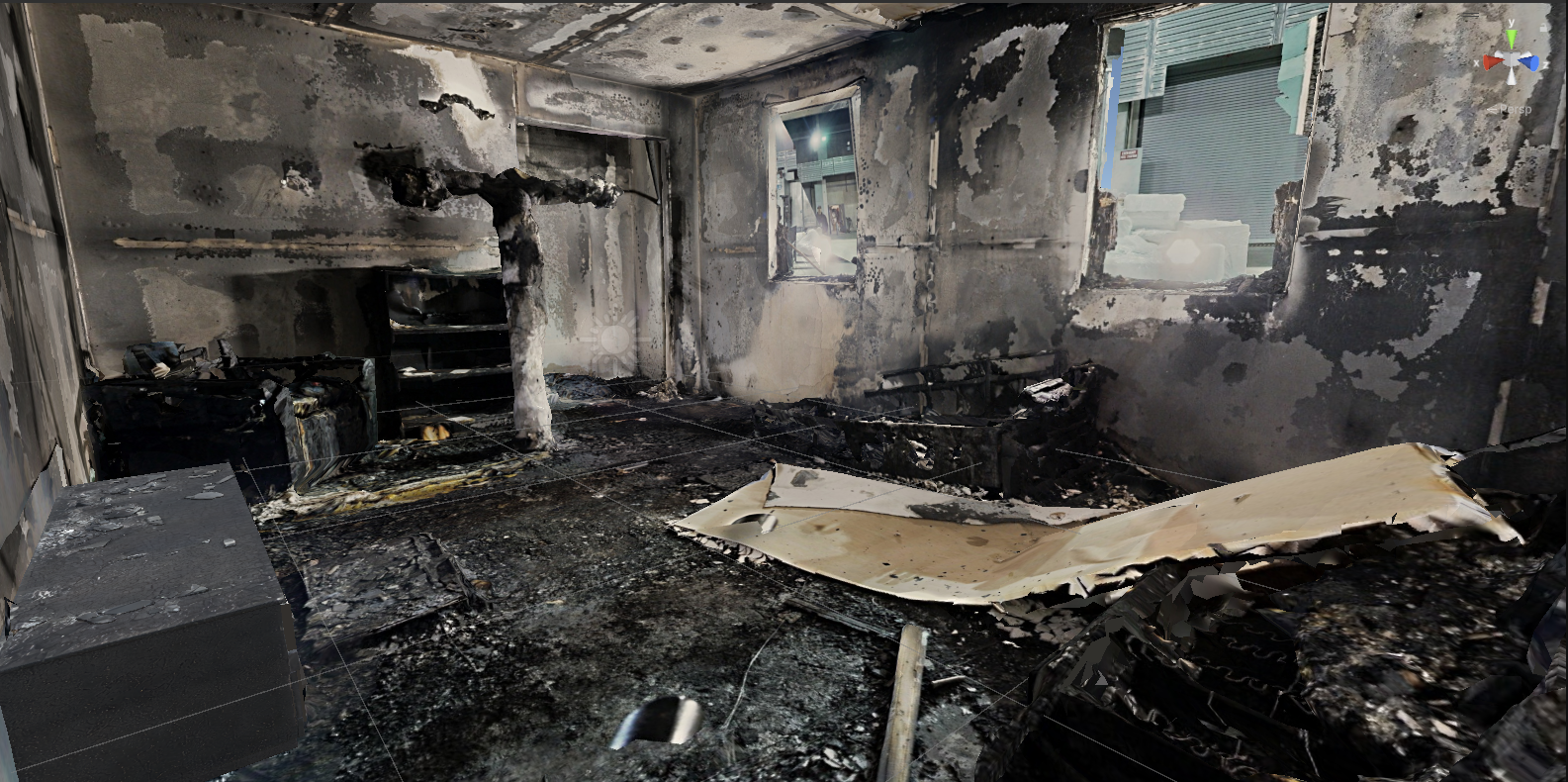
Examine reconstructed scenes before and after a fire.
-
Spatial Evidence
Record observations at specific locations in 3D.
-
Fire Development Review
Examine fire-development visualizations alongside scene evidence.
02 / PROTOTYPE & METHOD
A Virtual Environment for Fire Investigation Training
The prototype connects scene exploration, spatial evidence annotation, and fire-development visualization within a 3D investigation environment.
2.1 — Explore the Fire Scene
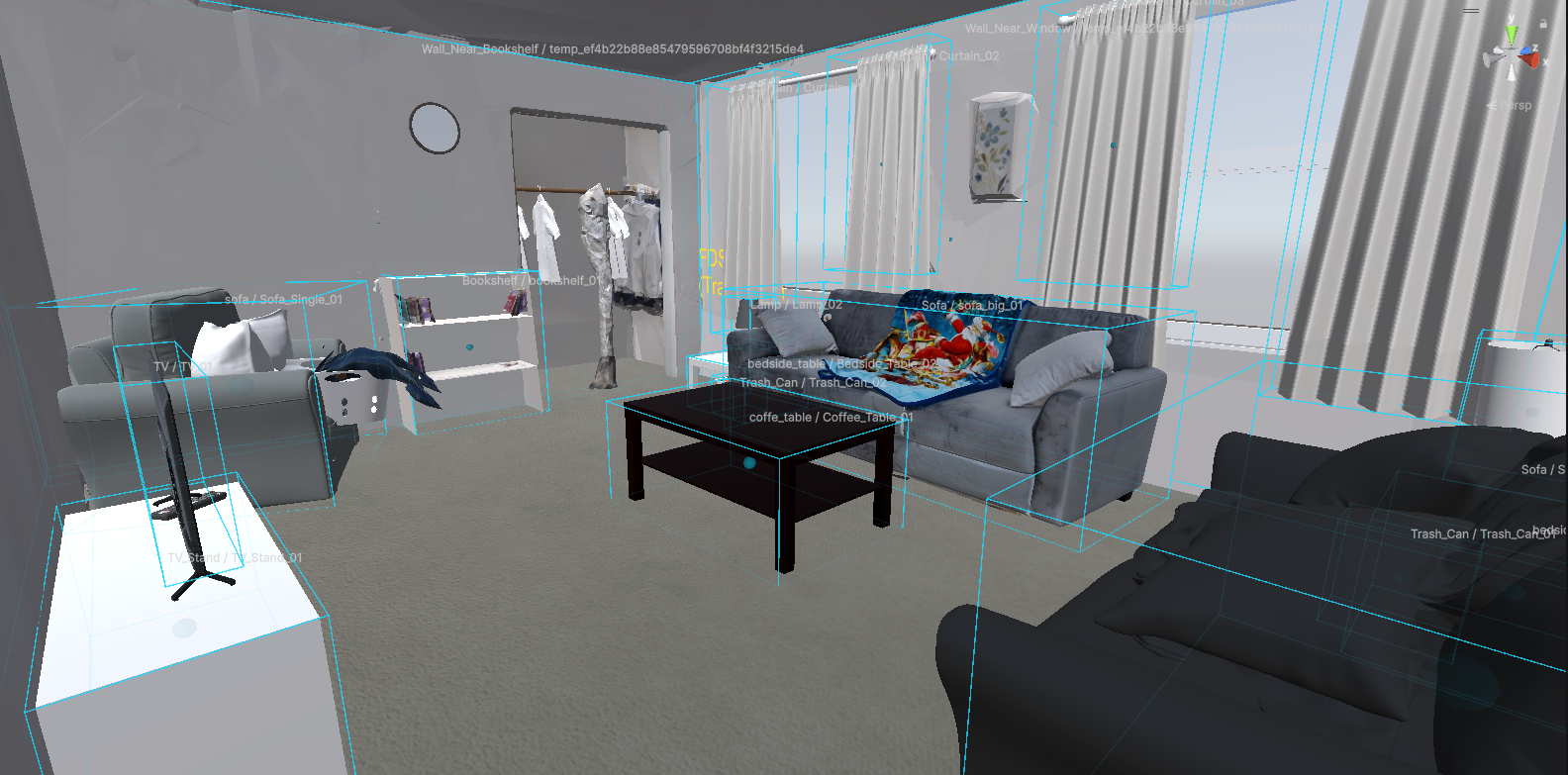
Learners can examine reconstructed pre-fire and post-fire scenes to identify changes and locate potential evidence.
2.2 — Record Spatial Evidence
The prototype allows observations and interpretations to be associated with locations in the 3D scene.
2.3 — Review Fire Development
Fire-development visualizations can be examined alongside scene evidence to support the review of possible explanations.
Toward AI-Assisted Investigation Training
The virtual environment provides a basis for studying how learners collect evidence and develop investigative explanations. Future work will investigate AI-assisted feedback and adaptive training based on these interactions.
Research Team
- Mengjun Wang (UF)
- Karthick Mohan Kumar (UMD)
- Zheng Wei (UMD)
- Shuai Li (UF)
- Shuna Ni (UMD)